Rammed Earth House

Structures that resist time, are in harmony with nature and integrate with aesthetics.
Rammed Earth Houses and Buildings in History
Rammed earth construction has a long history. Çatalhöyük is characterized by its characteristically rammed earth brick structures. Some houses were built using a mixture of sun-dried mud and straw, adobe, reeds, wooden poles, and plaster. Parts of the Great Wall of China were built using this technique and still stand more than 2,000 years later. Examples of rammed earth buildings are found throughout Europe. French and German immigrants brought this style of construction with them to the United States, and there are now churches, homes, schools, and other buildings made of rammed earth from New York to Florida.
After the U.S. Department of Agriculture published instructions on how to build a rammed-earth house in 1926, the method became popular among poor farmers during the Depression. The method disappeared after World War II, but in the 1970s builders in the western United States revived rammed-earth. These homes are increasingly common in Arizona, New Mexico, California, and Colorado. Rammed-earth construction is also extremely popular in Australia, where wood is limited and expensive for construction. About 20 percent of new homes in the western part of the country are built this way
”This ancient building language is being reborn today at the heart of ecological architecture.
Finding the Right Soil Mix
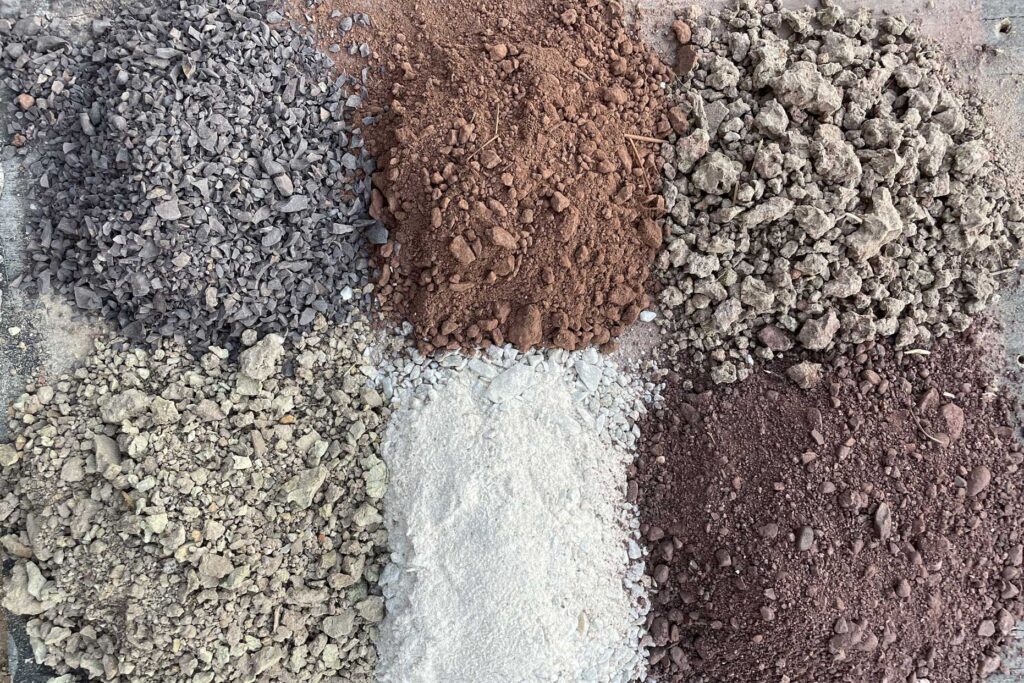
In the days when the Great Wall was being built, people would simply pack down some soil and be done with it. The walls would either stand the test of time or they wouldn’t. Today, we know more about the properties of soil. Packed soil requires a mix of soils, but it shouldn’t contain too much clay; too much clay will cause the walls to shrink and crack.
The Many Benefits of Rammed Earth Buildings
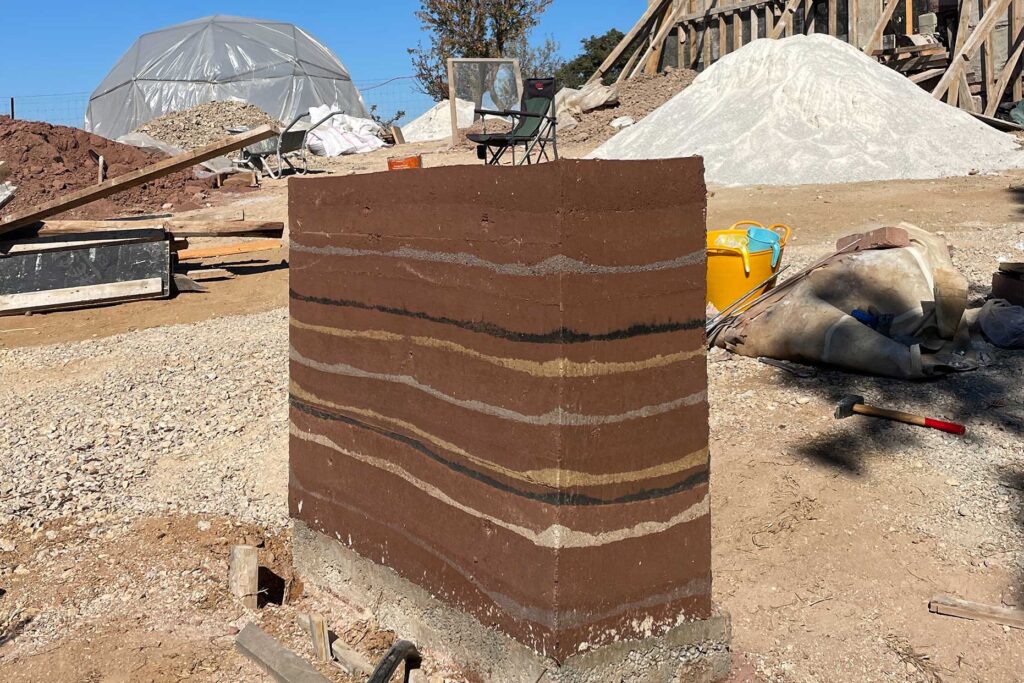
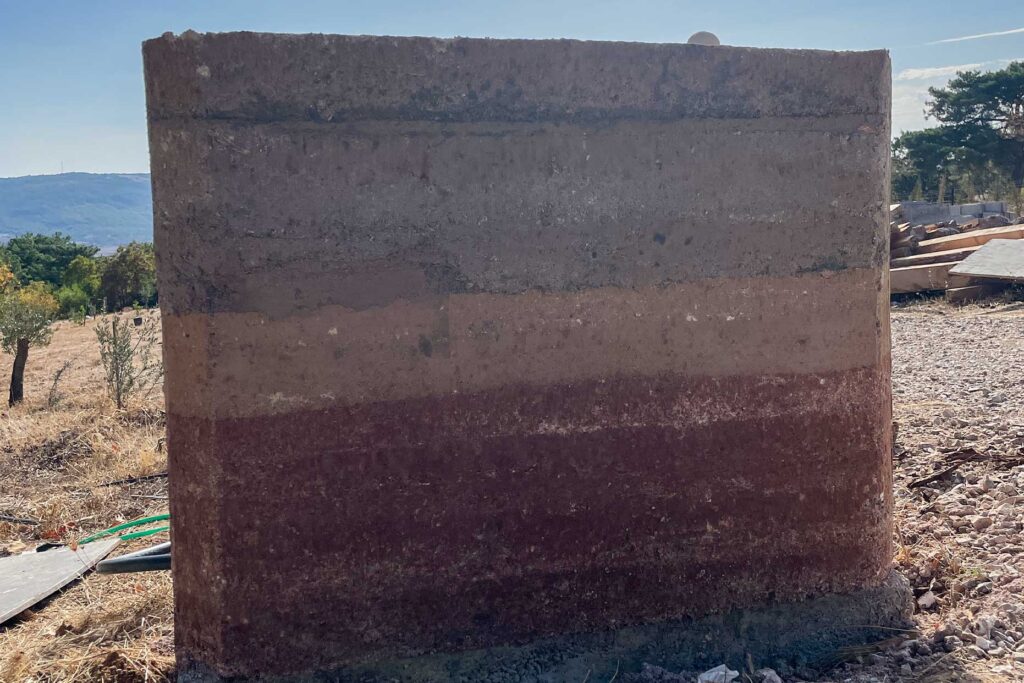
When you approach a rammed earth home, you may notice faint lines on the outside. These lines indicate where each level of soil has been compacted. You may also notice that the exterior is not a uniform color. It wouldn’t be dramatically different, but there may be areas where the wall is slightly lighter or darker. The homeowner could have covered up this imperfection with plaster or tile, but most rammed earth homeowners seem to prefer the unconventional look of their homes.
When you step inside the house, you’ll notice how thick the walls are; rammed earth walls typically range from 18 inches to 24 inches (46 cm to 61 cm). The thick walls contribute to the home’s overall sense of quiet, warmth, and comfort. One homeowner likened entering the rammed earth walls to being embraced by a loved one. But these walls also provide many other benefits.
So what are the benefits of living in a rammed earth home? Are they exposed to the same dangers as a sand castle on the beach – water, erosion and time? How are they built?
”A house built with soil doesn't take you in. It surrounds you.
For walls constructed from stabilised compressed earth (SRE) in the UK:
Section A – Structure
- Rammed soil has proven to be suitable for load-bearing and non-load-bearing construction.
- The compressive strength of unstabilized compacted soil is 1 MPa maximum, and the compressive strength of stabilized compacted soil is about 10 MPa.
Section B – Fire Safety
- Compressed earth can be classified as a non-combustible material
- A 300 mm wall can provide at least 90 minutes fire resistance.
Part C – Moisture resistance
- Rising damp is prevented by DPCs.
- Penetrating moisture is limited by absorption and subsequent evaporation.
- Air erosion is reduced/prevented with appropriate details (e.g. extended eaves, raised plinths, rain screens, etc.).
Section E – Resistance to sound transmission
- Rammed earth walls provide effective acoustic separation
- Where floors are supported by partition (party) rammed earth walls, the design details should comply with other solid masonry standards, but with the added requirement to accommodate moisture movement.
Section L – Fuel and power saving
- U value of 300 mm compressed earth wall “H 1.5 – 3 W/m 2 Since it is K, insulation must be added in exterior wall applications.
Regulation 7 – Materials and Workmanship
- Suitability of compressed earth materials determined by sampling, laboratory testing of materials or priority.